(414) 667-6082 [email protected] 9700 West Loomis Road Franklin, WI 53132
Book Appointment

Jaw cyst & lesion removal in Franklin

— precise diagnosis, careful removal, and peace of mind
Jaw cysts and oral lesions are more common than most patients realize — and the vast majority are benign. But even benign cysts can grow, damage surrounding teeth and bone, and become significantly more complicated to treat if left alone. Early detection and careful removal is nearly always the right approach.

In-office jaw cyst removal and biopsies with routine certified pathology reviews

Anxiety Management

Addressing the Question Patients Are Afraid to Ask

The honest answer: most jaw cysts and lesions are completely benign

"The vast majority of jaw cysts and oral lesions are benign — meaning non-cancerous — including the most common types: periapical cysts (from tooth infection), dentigerous cysts (around impacted teeth), and odontogenic keratocysts. Oral cancer does occur, but it represents a small minority of jaw lesions and has distinct clinical features we assess thoroughly at your evaluation."

Why we routinely biopsy even benign-appearing lesions

"Visual and radiographic appearance alone cannot definitively confirm a lesion's cellular nature. Every removed cyst or lesion is immediately sent to an external oral pathology laboratory for professional microscopic analysis — this is the only way to provide a definitive diagnosis and completely rule out atypical cells. The biopsy process is routine, highly protective, and not alarming."

Incidental Findings Guidance

"I have no symptoms — why do I need surgery?"

Most jaw cysts are discovered completely incidentally on routine dental X-rays — before physical symptoms develop. Genuinely healthy patients are understandably confused when told they need oral surgery for something they cannot feel.
What happens if left untreated

We provide comforting oral conscious or nitrous oxide dental sedation paths for anxious patients to ensure your visit remains entirely relaxed.

Why timing matters

Small, early cysts can often be removed comfortably with minimal disruption to surrounding teeth and bone. Large, long-neglected cysts may require extensive bone grafting reconstruction or complex secondary specialist referrals.

Recurrence risk factors

Certain cyst profiles — particularly odontogenic keratocysts — exhibit higher natural recurrence rates. This demands careful surgical execution and extended radiographic follow-up monitoring over multiple years to secure your health.

Pathological Classifications

Common Variations of Oral Cysts & Lesions

Periapical (radicular) cyst

Our most commonly diagnosed jaw cyst format — forms at the root tip in response to a chronic, long-term dead nerve infection. Treatment involves surgical enucleation combined with an apicoectomy root end seal or extraction.

Dentigerous cyst

Forms cleanly around the un-erupted crown of an impacted tooth — most commonly seen wrapped around hidden wisdom teeth or upper canines. They can grow to massive sizes before symptoms emerge, requiring cyst removal alongside tooth extraction.

Odontogenic keratocyst (OKC)

A more aggressive, fast-growing cyst variety displaying a high historical recurrence rate. Requires highly careful surgical curettage techniques and extended periodic radiographic follow-up imaging to manage safety.

Soft tissue lesions

Includes intraoral mucoceles, fibromas, papillomas, and other benign soft-tissue overgrowths across the gums, cheeks, tongue, or palate structures. All are biopsied for microscopic confirmation.

Oral potentially malignant disorders

Leukoplakia, erythroplakia, and irregular surface lesions that warrant close monitoring or strategic biopsy due to malignant transformation risks. Identified early during routine visual oral cancer screenings.

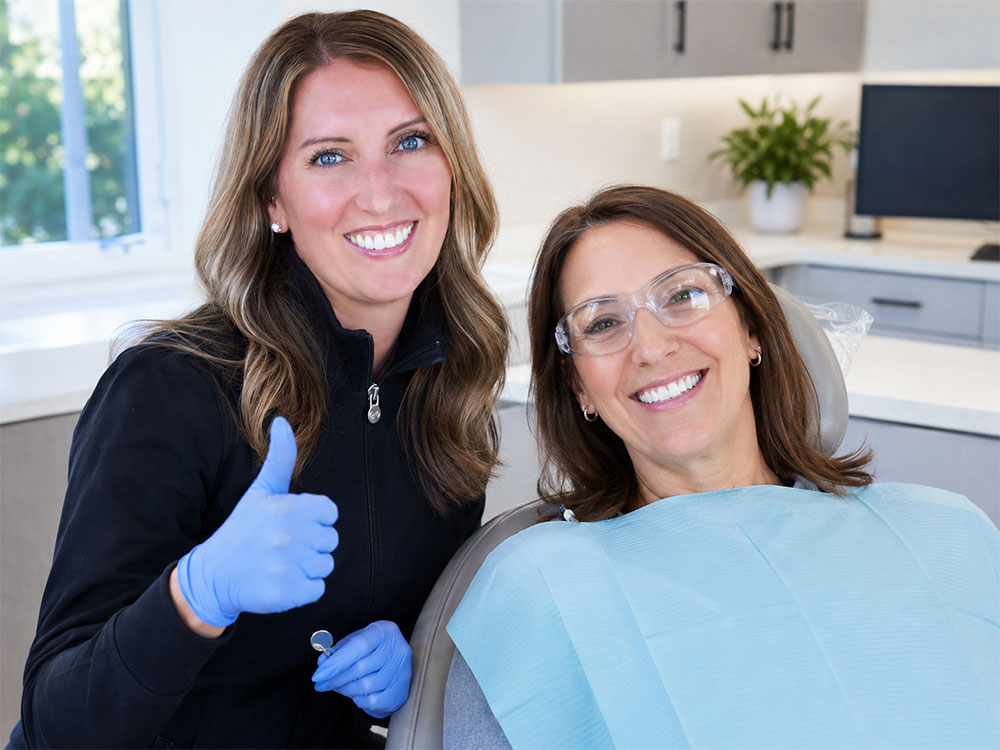
A Loomis Road Dental clinician giving a thumbs up beside a smiling patient in the chair

The Surgical Workflow

A Streamlined, High-Comfort Outpatient Protocol

01

Imaging & diagnostics

Periapical scans and 3D CBCT cone-beam imaging analyze the exact cyst volume, boundary limits, and physical proximity to sensitive local nerves or adjacent roots.


02

Anesthesia support

Thorough local anesthesia is administered smoothly. Custom conscious oral or IV sedation avenues are available for complex cases or highly anxious dental patients.


03

Surgical excision

The cyst or lesion framework is carefully excised in its entirety. The surrounding bone wall is gently curetted to clear out residual lining cells, and a bone graft is placed if needed.


04

Pathology submission

Every bit of removed tissue is transferred directly to an external oral pathology laboratory. We review written reports together and schedule regular follow-up monitoring scans.


Experienced jaw cyst diagnosis and removal — with pathology review and long-term monitoring

Advanced 3D imaging

We leverage high-resolution on-site CBCT scanning technology to map your cyst structure in 3D. This ensures absolute safety by evaluating bone depth boundaries before any surgical step.

Routine pathology submissions

We do not make guesses regarding cell health. Every single removed lesion is processed through a certified oral pathology lab as a mandatory safety baseline protocol.

Long-term monitoring tracks

We structure regular follow-up radiographic intervals adjusted specifically to your cyst's recurrence risk profile, catching any changes while they are tiny and easy to treat.

Real Patient Feedback

Google reviews

Trusted by local families

4.9 ★★★★★ Google
Antonia
Antonia3 months ago
★★★★★

Was treated so well and everyone was so friendly.
Gilberto Rojas
Gilberto Rojas3 months ago
★★★★★

Amazing stuff amazing professionals just the best

Kathryn Winkler
Kathryn Winkler2 months ago
★★★★★

So kind and gentle with everything they do with your teeth and very up front…

Jason Johnson
Jason Johnson2 months ago
★★★★★

Dr Jordan is a regular guy, makes me feel comfortable.

Christine Wimmer
Christine Wimmer1 month ago
★★★★★

The dentist and assistant were extremely professional, polite and patient. They explained everything and checked…

Tom Heeren
Tom Heeren2 months ago
★★★★★

They pay attention to detail and do a excellent job, friendly staff.

Jerry Gnas
Jerry Gnas3 months ago
★★★★★

My Hygienist, Holly, was awesome . She was knowledgeable and explained what occurred in the…

Allen Schoenleber
Allen Schoenleber6 months ago
★★★★★

Appointment was on time. Procedure could not have went better and I was very happy…

Pam witt
Pam witt3 months ago
★★★★★

Great hygienist and informative dentist

Timothy Kusek
Timothy Kusek4 months ago
★★★★★

I always feel taken care of and the staff is super friendly!

Hunter Phillips
Hunter Phillips3 weeks ago
★★★★★

Dr. Erica & the entire Loomis team is exceptional.

Penny Gnas
Penny Gnas4 months ago
★★★★★

Professional staff, knowledgeable, friendly and cares about the patient.

Frequently Asked Diagnostic Questions
The vast majority of jaw cysts are entirely benign (non-cancerous). Common types like periapical or dentigerous cysts are filled with simple fluid or soft tissues, not cancer cells. However, because microscopic pathology is required to rule out all atypical cells, we send every removed specimen to a certified oral pathology lab for confirmation.
 
No. Jaw cysts do not heal or resolve on their own. Once a cyst lining is formed, it continues to grow slowly but continuously, absorbing the surrounding jawbone structure and threatening adjacent healthy tooth roots. Watchful waiting is rarely appropriate once a cyst is identified.
 
Recovery depends heavily on the cyst's size and location. Most patients experience mild soreness and minor local swelling for 3 to 5 days, which is managed easily with standard pain relievers. Massive cysts requiring bone grafting updates may require a few weeks of soft-food restrictions.
 
Most common jaw cysts do not recur following complete surgical enucleation. However, specific varieties like odontogenic keratocysts (OKCs) carry a known recurrence rate of up to 30%. This is why we establish precise, customized post-operative tracking intervals using periodic digital X-rays.

Related services

Oral cancer screening

A non-invasive visual and tactile evaluation incorporated into every routine hygiene exam to identify surface anomalies early.

Tooth extractions

When an expansive cyst has destroyed the supporting bone around a non-restorable tooth root, gentle removal is coordinated.

Dental implants

Advanced bone grafting completed during cyst removal protects jaw volume, preparing the site for future implant reconstruction.

Open for Appointments

Schedule your visit with our friendly dental team today.